The right material for furniture that stands the test of time
Choosing the material for outdoor furniture is not merely a question of aesthetics. For hospitality professionals, public authorities, or landscape architects, it is a long-term investment.
Between regular maintenance, weather resistance, and total cost of ownership, each material reveals its strengths and limitations.
Comparison Chart: The Three Materials at a Glance
| Criterion |
Wood |
Plastic |
Metal (Powder-Coated Steel) |
| Maintenance |
High (regular oiling) |
Low (simple cleaning) |
Very Low (water washing) |
| Durability |
10-15 years (with maintenance) |
3-7 years |
25-30+ years |
| UV Resistance |
Medium (greying) |
Low (fading) |
Excellent |
| Weather Resistance |
Medium (risk of cracks) |
Medium (embrittlement) |
Excellent |
| Usage Resistance |
High Traffic |
Medium Traffic |
Intensive Use |
| Vandalism Impact |
Possible damage, difficult to destroy |
Significant damage possible |
Visual damage, very difficult to destroy |
| Initial Cost |
Medium to High |
Low |
Medium to High |
Why Metal is the Preferred Choice in a B2B Context?
The entire challenge of purchasing outdoor furniture in a B2B context revolves around its resistance (weather, UV, intensive use, vandalism) and its ROI (purchase cost, maintenance, and final lifespan).
Profitable Investment for Intensive Use
For a hotel, restaurant, or public authority, furniture undergoes intensive use. The total cost of ownership is as important as the purchase price. Metal, despite a higher initial investment than plastic, largely pays for itself through its longevity and low maintenance.
Resistance Based on Traffic
On-site realities impose varying constraints. A city-center cafe, a public esplanade, or a seaside hotel generate very different levels of use.
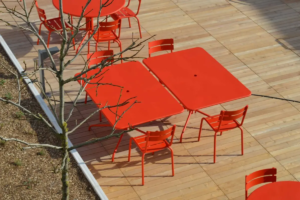
- Intensive Use: restaurant terraces, train stations, urban parks. Metal furniture withstands daily rotations without weakening. Seating remains stable, and structures retain their geometry even after thousands of use cycles.
- Medium Traffic: hotels, semi-public spaces. Wood can keep pace provided it receives rigorous maintenance. Metal, however, endures these conditions without requiring special attention.
- High Occasional Traffic: events, festivals, trade shows. Where plastic degrades visually and structurally, metal retains its appearance and solidity, season after season.
Resilience to Vandalism
Beyond natural wear and tear, public and semi-public furniture faces a less palatable reality: intentional damage. This often underestimated dimension significantly impacts economic calculations.
- Plastic: frequent visual damage (engravings, cigarette burns), very difficult to destroy but rapid embrittlement. A sharp blow is enough to crack a structure already weakened by UV.
- Wood: significant damage possible. Deep engravings, tearing, impacts that compromise the structure. Aesthetic repairs remain visible, and replacement quickly becomes necessary.
- Metal: possible but superficial damage, difficult to destroy. An act of vandalism leaves traces (scratches, light dents) but does not compromise the furniture’s function. The robustness of steel discourages attempts at destruction. A paint touch-up is often enough to erase the marks.
Brand Image: Aesthetic and High-End Furniture
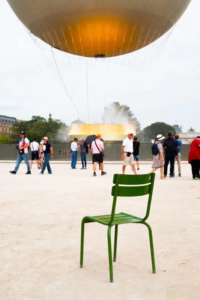
A high-end establishment cannot settle for entry-level furniture. Metal, with its apparent solidity and refined aesthetics, conveys values of quality and durability. Collections inspired by French heritage reinforce this image of authenticity.
Choosing metal furniture manufactured in France means investing in recognized expertise. French workshops, particularly in Auvergne-Rhône-Alpes, perpetuate bending, welding, and surface treatment techniques that guarantee robust and elegant pieces. This choice also meets growing expectations for local and responsible production.
→ Edmond Fils designs and manufactures high-end metal outdoor furniture for all hospitality professionals, hotels, and public authorities.
For demanding professional use, metal proves to be the most relevant material. For public space managers or establishment directors, it is a major financial argument: fewer replacements, fewer interventions, less budget tied up in renewal.
Investing in furniture designed to last for decades is a commitment to quality and legacy, values that resonate particularly in a world where sustainability is becoming an imperative.